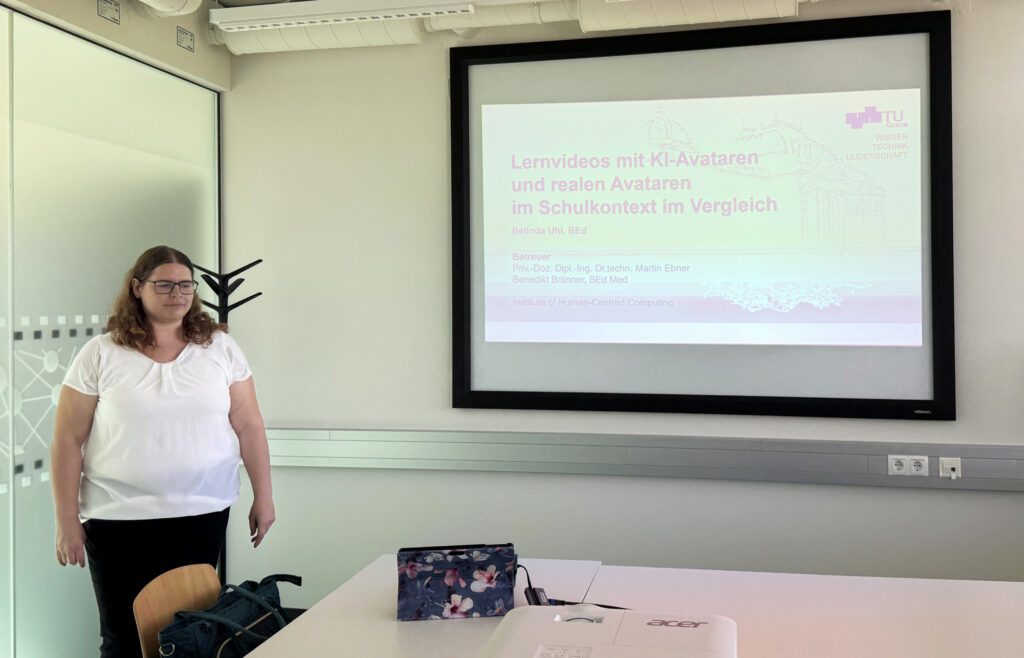
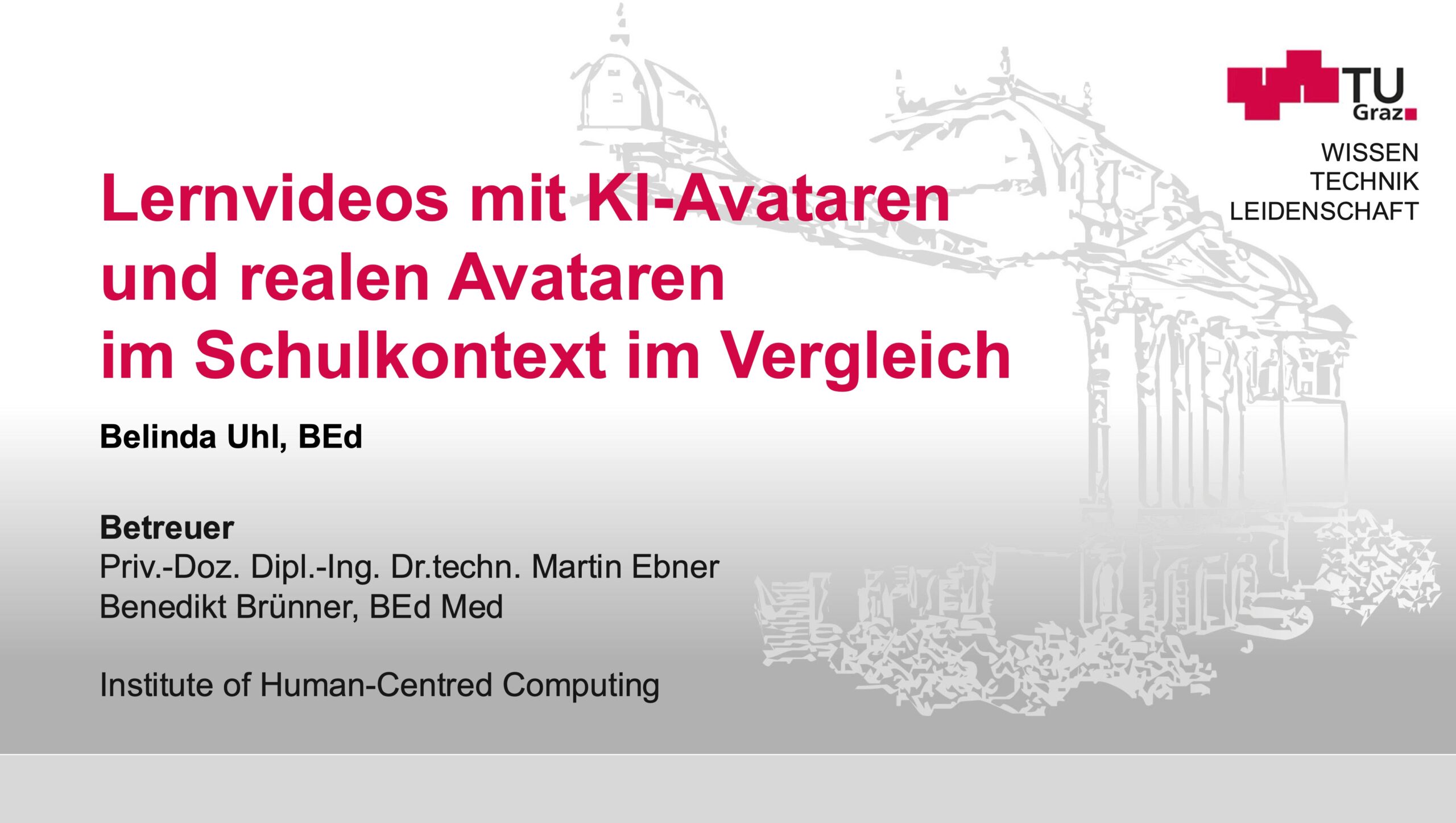
On 24 June 2026, Belinda Uhl successfully defended her Master’s thesis.
As part of her research, she investigated how lower secondary school pupils perceive educational videos presented by different characters: their own teacher, a digital robot character, or an AI-generated personal avatar of an unknown person.
To this end, nine educational videos were produced on the topics of the structure and functioning of the internet, data transmission and cloud storage. To complement these, worksheets were developed which, in addition to summarising the content, also included practical exercises and research tasks. The pilot lesson was carried out with 20 pupils at a secondary school.
The results show a clear preference for their own teacher: depending on the video, between 75 and 85 per cent of pupils chose this version to complete the tasks. The reasons they cited in particular were that the teacher was someone they knew well, that the voice was easy to understand, and the quality of the explanation.
The personal AI avatar was generally well received. Of the 17 pupils surveyed, only one person remarked that it might not be a real person. At the same time, the feedback made it clear that more natural-sounding voices and a wider variety of gestures remain important for acceptance.
It was not possible to make a reliable comparison of learning outcomes between the different video versions due to the uneven selection. Nevertheless, the study makes it clear that the personal connection with the teacher plays a key role in educational videos. In future, AI avatars of one’s own teacher could combine the advantages of simplified video production with a sense of familiarity.